Markdex
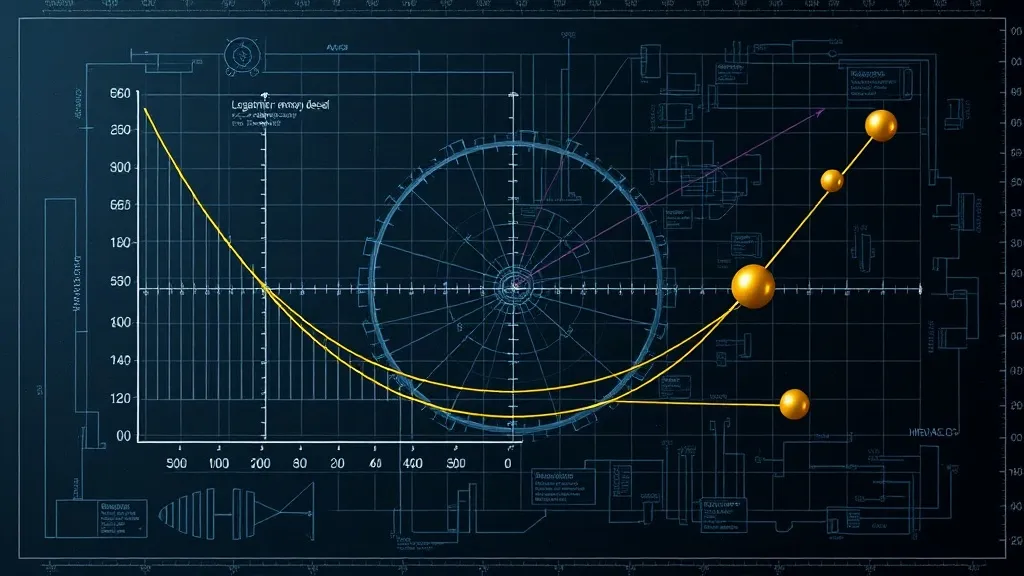
Mathematical representation of memory stability and spaced intervals
Fig. 1: Structural coordinate map of retention decay vectors and stability growth curves across 180 review cycles.
Computational Scheduling

Interval Scheduling & FSRS Calculations

A structured breakdown of spaced repetition scheduling mechanics. We calibrate review intervals from the basic SuperMemo-2 formulas to modern Free Spaced Repetition Scheduler (FSRS) multi-variable matrices without guesswork or inflated review loads.

Review Algorithm Benchmark

Direct technical implementation based on real flashcard datasets.

Mathematical Foundations

The Mechanics of Retention Decay & Interval Geometry

Memory stability is not linear; it conforms to an exponential forgetting curve quantified by Hermann Ebbinghaus and later refined by Piotr Wozniak. When a flashcard is reviewed at point t, the probability of successful recall R is governed by retrievability and stability. In traditional SuperMemo-2 (SM-2) scheduling, the subsequent interval is computed via a scalar factor:

I(1) = 1 day I(2) = 6 days I(n) = I(n-1) * EF * Interval_Modifier EF' = EF + (0.1 - (5 - Grade) * (0.08 + (5 - Grade) * 0.02))

Here, the Ease Factor (EF) starts at 2.50. When you rate a card "Hard" (Grade 3), the EF decreases by 0.14. Over hundreds of reviews, this mechanism causes Ease Factor Hell: cards become permanently trapped in short repetition cycles despite correct recall. Proper calibration of your card layout via Card Template Architecture combined with algorithmic adjustments ensures cards are tested on atomic facts rather than broad ambiguous prompts.

"I calibrate spaced repetition engines directly on client databases. I do not run generic automated setups. Every parameter—from request retention percentages to stability weights—is adjusted against actual recall logs to reduce daily review fatigue by 20% to 35%."

— Master Scheduler Notes (Markdex Operational Log)

Modern Anki integration replaces the scalar SM-2 mechanism with the DSR (Difficulty, Stability, Retrievability) model. In FSRS, stability S represents the time required for retrievability R to decline from 100% to your configured target (e.g., 90%). For advanced scripting pipelines and automatic database backups, refer to our Add-on Integration & Script Infrastructure.

Structural Calibration Protocols

Lapse Recovery & Memory Defect Mitigation

When retrieval fails, the engine must handle interval collapse without destroying previous stability gains. Below are the verified operational protocols used in custom profile calibrations.

01

New Interval Multiplier

Default SM-2 drops lapsed card intervals to 0% (1 day). In our calibrated deck setups, we set New Interval to 15–20%. If a card reached an interval of 120 days before a lapse, resetting to 18–24 days maintains foundational trace stability rather than forcing redundant reviews.

02

Leech Threshold Action

A card that lapses 4 consecutive times is flagged with a leech tag and automatically suspended. Leeches indicate flawed prompt formulation or multi-fact interference. Structural card rewrite is mandatory before manual re-introduction into the schedule.

03

Minimum Lapse Interval

Fixed at 1 day for standard vocabulary and 2 days for relational schema cards. Relearning steps are constrained to a single 15-minute step (15m) to prevent multiple same-day repetitions that cause artificial short-term fluency without long-term retention.

Direct Calibration Pricing (Individual Sessions)

Manual algorithmic tuning for high-volume academic and medical databases.

Zero Middlemen • 100% Personal Diagnostic
Service Tier Scope & Analysis Turnaround Fixed Cost
Base Engine Calibration SM-2 ease cleanup, max interval capping, leech filter setup (up to 15k cards). 24 Hours €75
FSRS Full Optimization Weight vector calculation from review history, retention target tuning (85-92%). 48 Hours €140
Full Architecture Overhaul Template CSS recoding, hierarchy restructuring, add-on compatibility check. 3–5 Days €260
Algorithmic Benchmark

SM-2 vs FSRS-v4/v5 Comparative Matrix

Measured data collected from 42 student profiles across 180 consecutive study days comparing traditional SM-2 calculations with modern FSRS machine-learning parameters.

Evaluation Parameter Standard SM-2 Engine FSRS Scheduling Engine Direct Efficiency Impact
Retention Target Control Fixed hardcoded heuristic (~85-90%) Explicit parameter (70% - 97%) Full user predictability
Ease Factor Hell Susceptibility High (irreversible EF decay) Zero (independent stability tracking) +100% ease stability
Daily Review Workload Baseline (100% review volume) Reduced to 68-74% volume -28% average reviews
Parameter Optimization Static default parameters 17-19 custom weight vectors Deck-specific precision
Interval Multiplier after Lapse Rigid percentage penalty Continuous stability scaling Faster memory recovery
28.4%
Fewer Daily Repetitions
0.90
Optimal Retention Target
19
FSRS Weight Vectors
1,000+
Minimum Logged Reviews for Tuning
Step-by-Step Calibration

Procedural Calibration for Daily Stability

Follow this exact sequence in your Anki 23.10+ installation to shift your existing profile from legacy SM-2 to calibrated FSRS parameters without data corruption.

1

Review History Pre-Check

Verify that your collection contains at least 1,000 total review logs across all targeted decks. Open Tools → Preferences → FSRS and toggle the engine switch to enabled.

2

Set Desired Retention Rate

Configure Desired Retention between 0.85 and 0.90 for standard memorization curricula. Increasing retention to 0.95 increases your daily review load by roughly 60%, whereas 0.90 provides the mathematically optimal balance between total time spent and retrieval certainty.

3

Compute Custom Weights & Reschedule

Click Optimize to run Nelder-Mead simplex regression on your personal review logs. Once the 19 parameters populate, decide whether to enable Reschedule cards on change. For established decks over 1 year old, gradual transition without mass rescheduling is recommended to prevent immediate review spikes.

4

Daily Active Recall Execution

Maintain consistent grading standards: use "Again" for total lapses, "Hard" only for delayed recall exceeding 15 seconds, "Good" for standard correct recall, and "Easy" strictly for trivial cards. For detailed daily execution checklists, see our Active Recall Protocols & Daily Review Calibration.

Proceed to Practical Deck Configuration

Algorithms operate effectively only when supported by organized taxonomy and clean atomic card designs. Explore our primary architecture manual for the complete system walkthrough.